ServicesCommercial HVAC
Commercial HVAC in Rosalia
We repair, replace and maintain the heating and cooling equipment that keeps shops, offices and small commercial buildings open. You get the cause in plain terms, a written quote before any work begins, and a straight answer on whether to repair or replace.
Equipment that works longer days
Commercial equipment runs through the whole business day and often well past it. A packaged rooftop unit over a retail space or a gas unit heater in a shop cycles far more often than a typical residential system, so belts stretch, bearings dry out and contactor points pit sooner. Most breakdowns trace back to one worn part, and finding that part quickly is what keeps your doors open.
We are licensed and bonded in Washington and carry $1M general liability insurance. That matters when a technician is on your roof, in your mechanical room or working around your staff and customers.
If you are putting up a new building instead of keeping an existing one running, our New Construction HVAC page covers that work.
What our commercial work covers
Rooftop unit diagnosis and repair
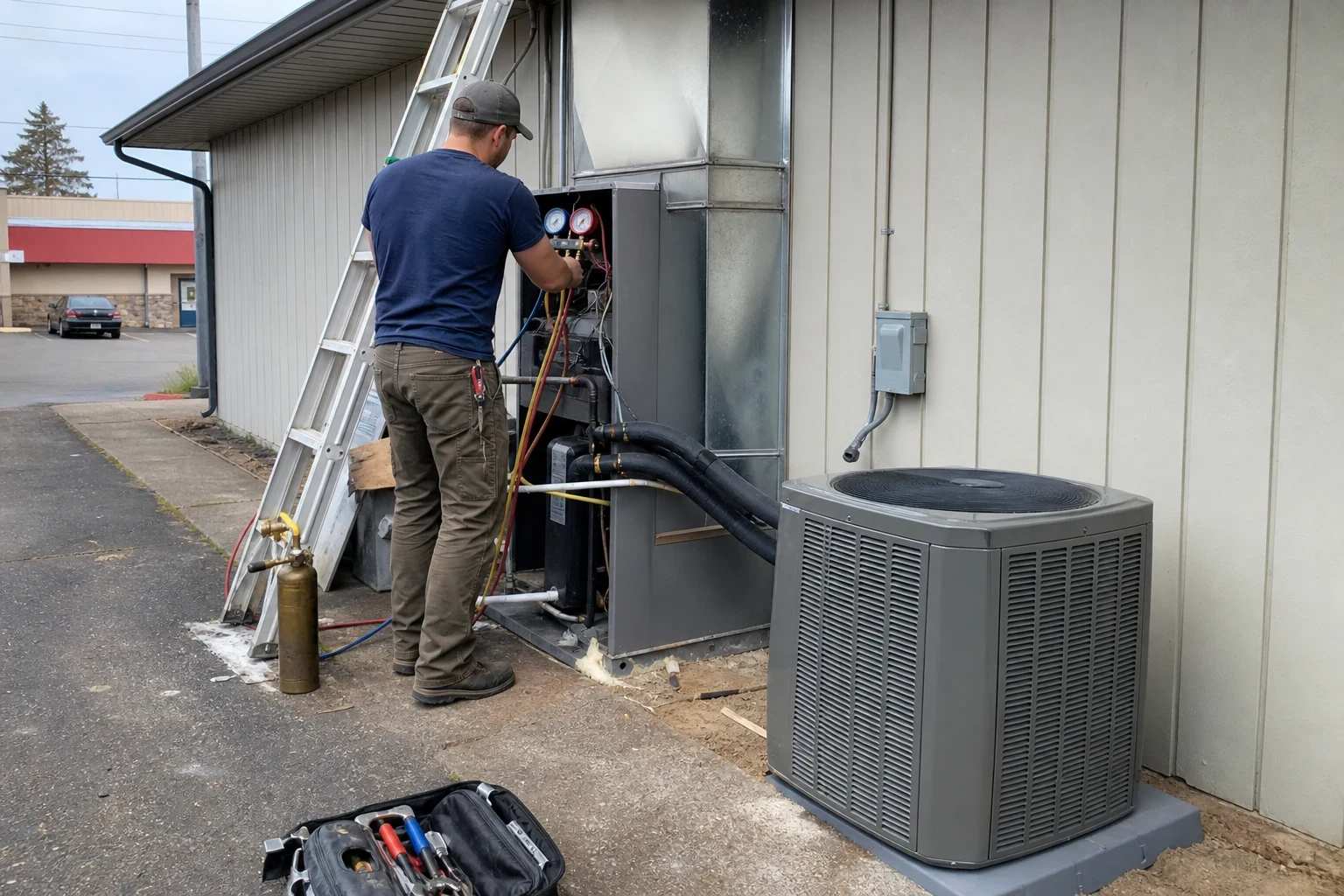
We test compressors, condenser fan motors, contactors, run capacitors and control boards on packaged units. On the gas side we check inducer motors, ignition controls, flame sensors and gas valves. Each reading points to a cause before any part gets replaced.
Shop and warehouse heaters
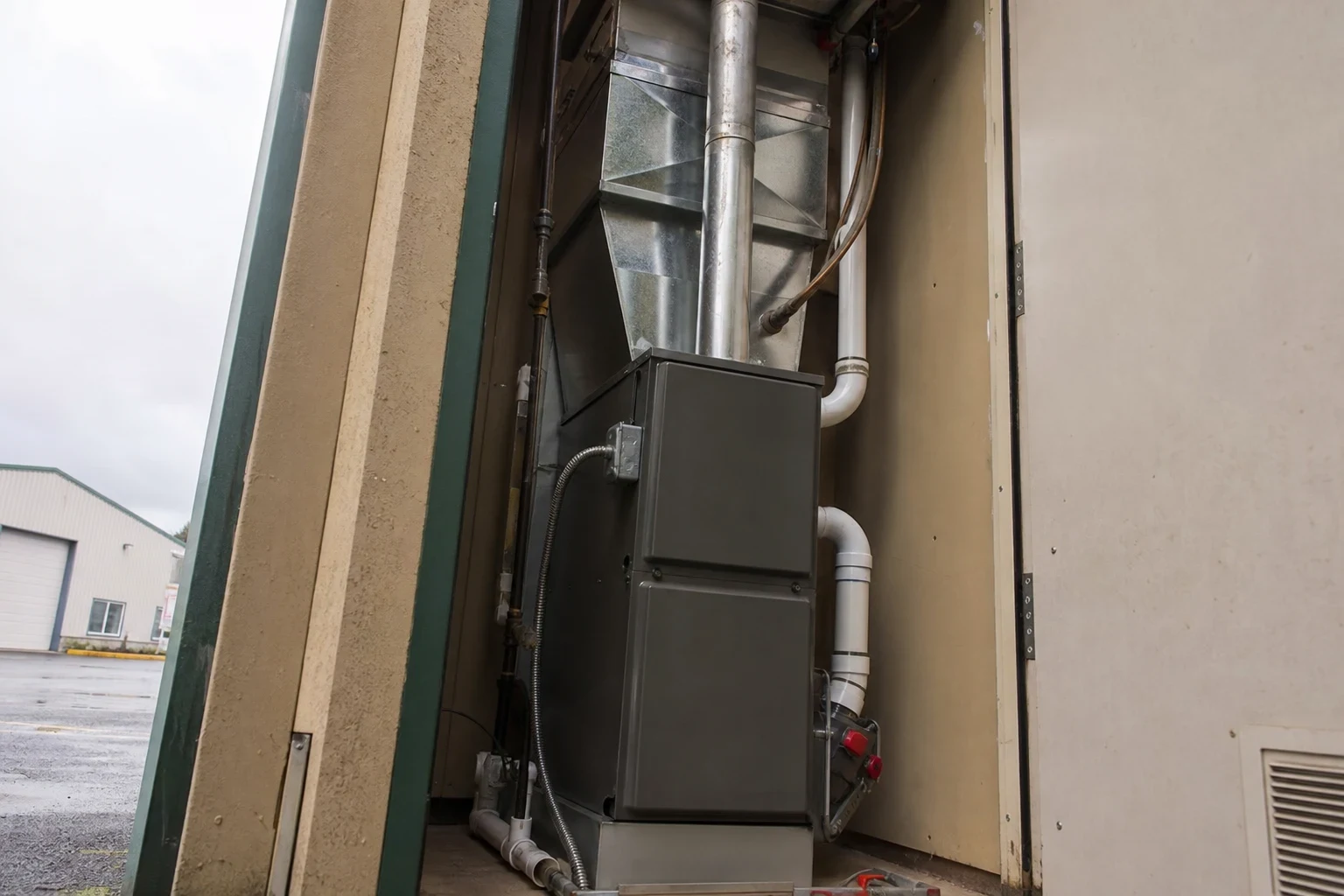
Hanging gas unit heaters and commercial furnaces get a burner and heat exchanger inspection, a combustion check and a look at the vent connections. Cracked exchangers and blocked flues are safety problems, so we tell you plainly when we find one.
Economizers and controls
An economizer damper stuck open pulls outside air into the building all winter and runs up the gas bill. We check actuators, sensors and linkage, then set thermostat schedules so equipment idles when the building is empty.
Scheduled upkeep
Filters, belts, coil cleaning, condensate drains and refrigerant checks on a set calendar. Our Maintenance Plans page explains the options.
Unit replacement
When a unit is worn out, we size the replacement to the space and its use, and plan the lift, curb fit and electrical tie-in. Estimates are free on installations and replacements.
Signs your building's system needs attention
- One zone hot, another cold
- A cold back office while the front stays warm often points to a failed heating stage, a bad zone thermostat or an economizer damper stuck in the wrong position.
- Water stains on ceiling tiles
- Rooftop units drain condensate through a trap. When the trap plugs or the evaporator coil ices over, water backs up and finds its way through the ceiling.
- Short cycling or tripped breakers
- A unit that starts and stops every few minutes, or trips its breaker, usually has a weak capacitor, a failing contactor or a compressor drawing high amps. Catching it early can save the compressor.
- Higher bills, same hours
- If utility costs climb while your schedule has not changed, look at dirty coils, a slipping blower belt or outside air dampers that never close.
- Packed condenser coils
- Field dust and harvest chaff blow onto rooftop condensers every summer around here. A matted coil cannot reject heat, so head pressure rises and the compressor works harder.
- Rumble or odor at heater startup
- A boom when a gas heater lights, or a burning smell that lingers, can mean delayed ignition or dirty burners. Shut the unit off and give us a call.
How a commercial service call runs
- 1
Your call
Tell us the equipment type, what it is doing and when the building is occupied. We take repair calls 24/7, and there are no emergency or after-hours fees.
- 2
On-site diagnosis
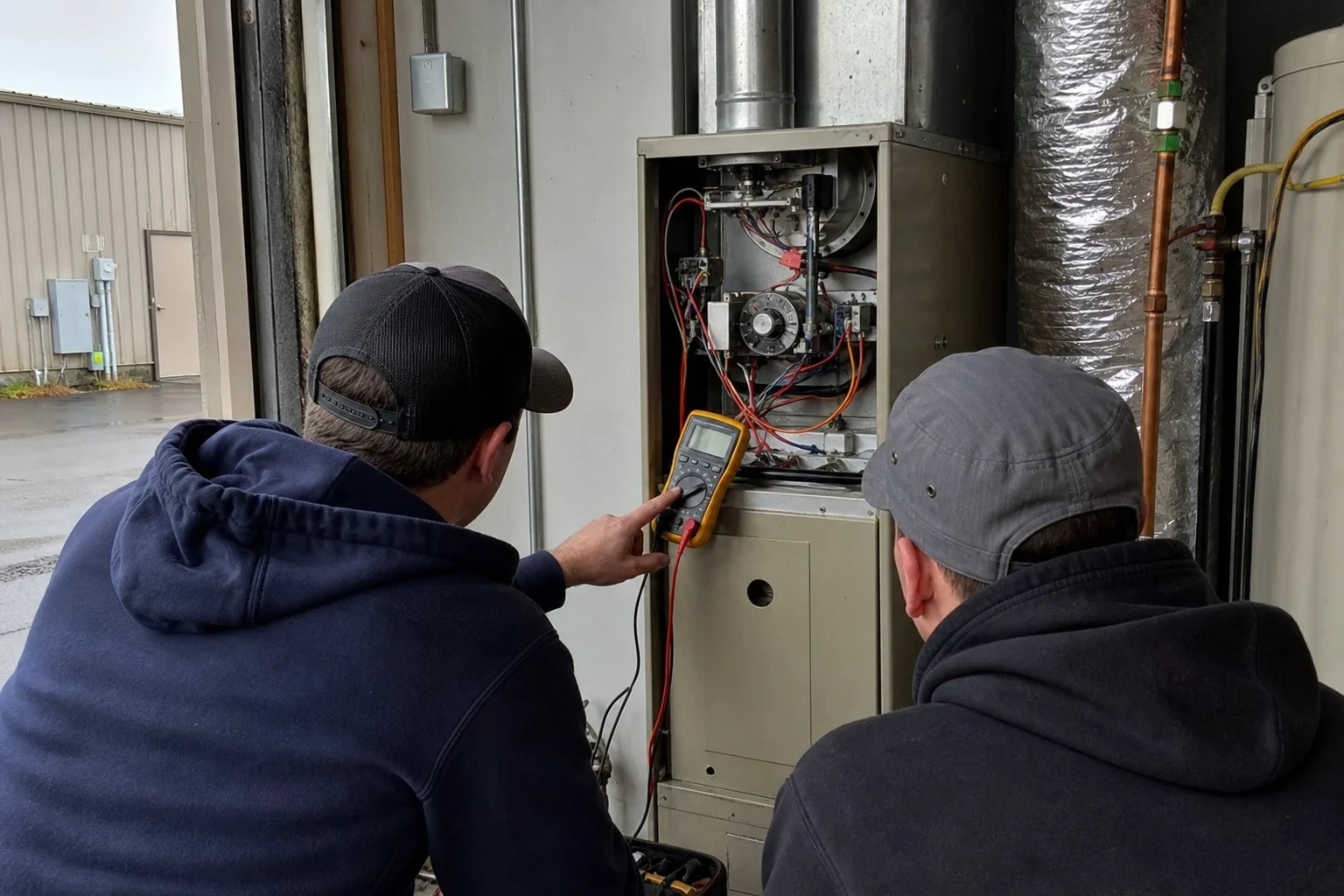
We lock out the unit, then measure amperage, refrigerant pressures, temperature split and combustion as needed. We take photos of what we find so you can see the worn part yourself.
- 3
The price on paper
Before a single part comes off the unit, we hand you the price in writing. The repair and any alternatives each get their own line, so you can compare them. If you go ahead, the diagnostic fee is credited toward the repair.
- 4
Repair and full test
We make the repair, then run the unit through heating, cooling and economizer modes to confirm every stage works. We can schedule around your open hours to keep disruption down.
- 5
Covered work
Every repair carries our 1-year labor warranty, and we leave a short record of what was found and replaced.
What moves the price of commercial HVAC work
Commercial jobs vary more than residential ones because the equipment, access and building use all differ. We price each job after seeing it and put it in writing before we start. These are the things that change the number.
- Equipment type and size
- A small split system and a large packaged rooftop unit use different parts and take different time. Tonnage, the number of heating stages and the controls all count.
- Access
- A roof hatch with a fixed ladder is quick. Units reached only by extension ladder, or a replacement that needs a crane lift, add time and planning.
- Parts availability
- Common motors and capacitors are easy to source. Proprietary control boards and compressors for older units can take longer and cost more.
- Age and refrigerant
- Older units on phased-out refrigerants are expensive to recharge. That cost often tips the decision from repair toward replacement.
- Number of units
- Servicing several units on one visit costs less per unit than separate trips.
Commercial HVAC questions
- Do you work on rooftop packaged units?
- Yes. Rooftop units are a large part of our commercial work, both gas and electric heat models. We handle the refrigeration side, the heating section, blowers, belts and controls.
- Can you come after we close?
- Yes. We answer repair calls 24/7, and we charge no emergency or after-hours fees. Many owners prefer we work outside business hours so customers and staff are not affected.
- How do you decide between repairing and replacing an old unit?
- We look at the failed part, the unit's age, its refrigerant type and the condition of the coils and heat exchanger. If a repair makes sense, we say so. If the cost of the fix is a large share of a new unit and more failures are likely, we tell you that too and give you both numbers.
- Is commercial repair work warrantied?
- Yes. All of our repairs come with a 1-year labor warranty. Manufacturer coverage on parts depends on the part and the brand, and we explain what applies to your job.
- Do you serve businesses outside Rosalia?
- Yes. We also work with businesses in Cheney, Colfax, Spokane, Airway Heights and Medical Lake. Give us a call and we will confirm we cover your location.
Get your building heating and cooling again
Tell us what your equipment is doing and we will tell you what comes next. Repairs are available 24/7, and quotes on replacements are free.