ServicesNew Construction HVAC
New Construction HVAC in Rosalia
We size and install furnaces, heat pumps, air conditioners and mini-splits for new homes. Every system starts with a load calculation from your plans, not a guess based on square footage, and you get a written quote before we set any equipment.
Heating and cooling built for the house on paper
A new home is the one chance to get equipment size right from the start. Tight framing, better windows and modern insulation mean many new houses need less capacity than older homes of the same size. An oversized furnace or AC short-cycles: it reaches the thermostat setting fast, shuts off, and never runs long enough to even out temperatures or pull moisture from the air.
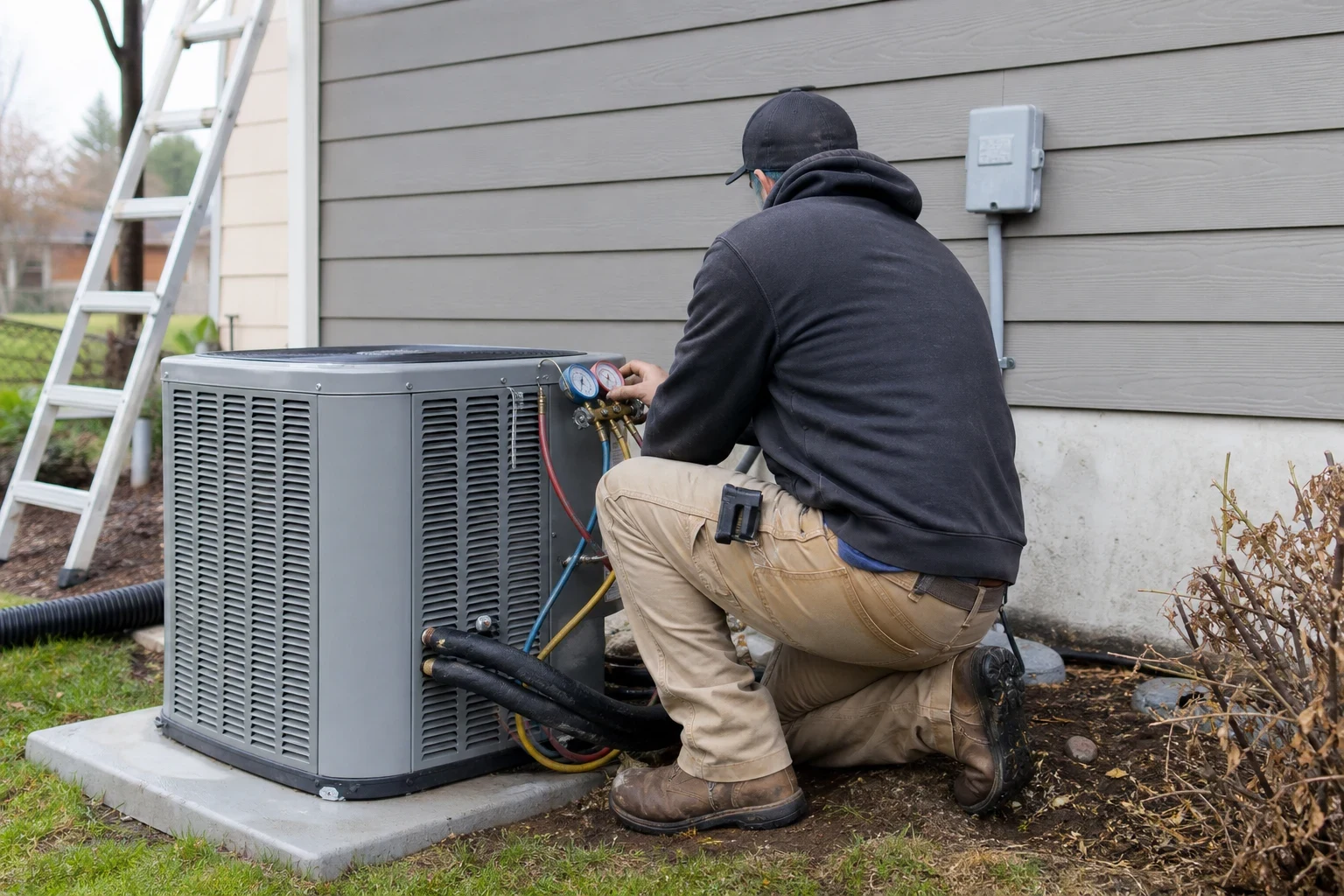
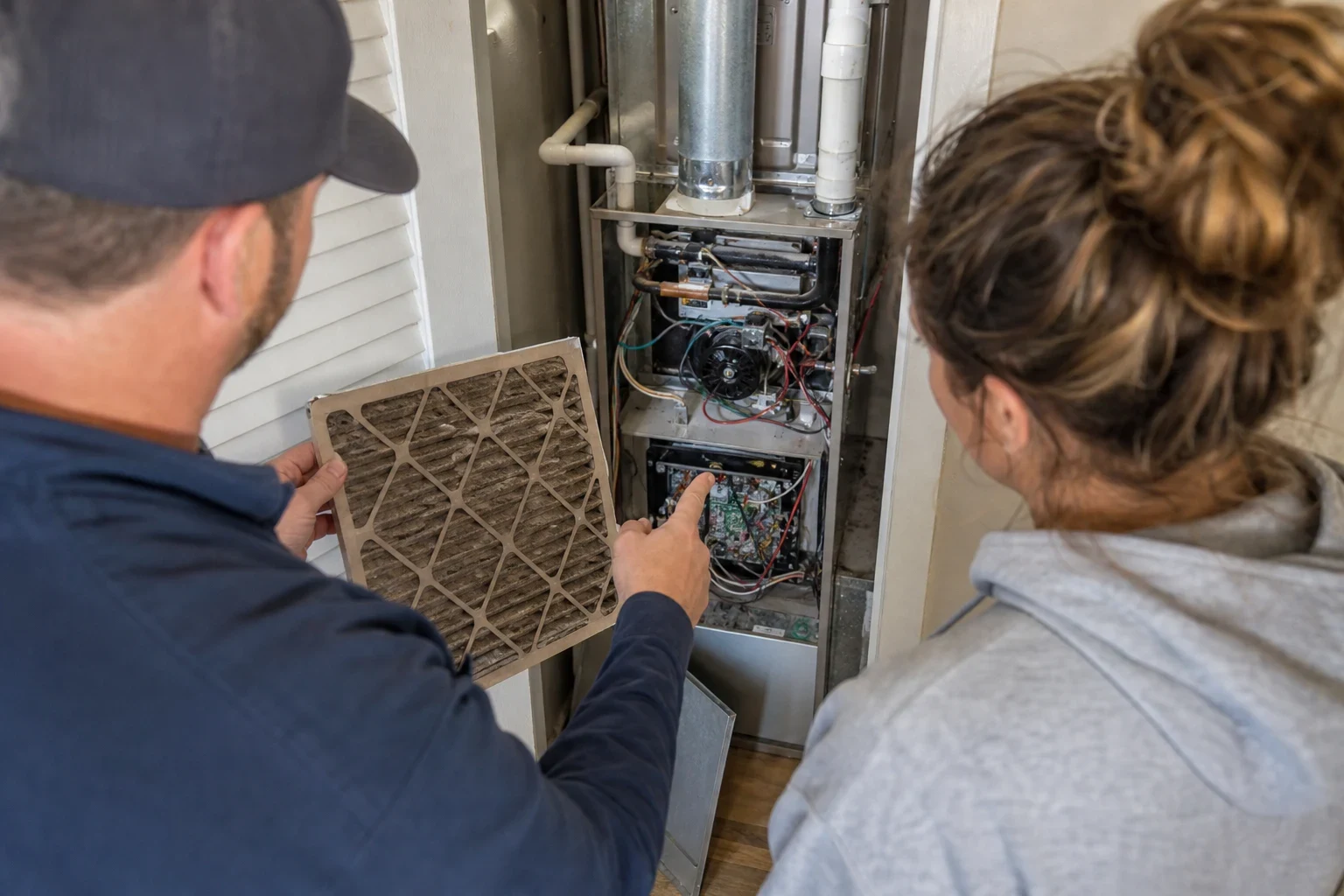
We work from your floor plans, window schedule and insulation specs to calculate heating and cooling loads, then match equipment to those numbers. Our work covers the heating and cooling equipment, refrigerant lines, venting, condensate drains, electrical connections at the unit, thermostat wiring and final startup. We coordinate rough-in and trim-out with your builder or general contractor so our work fits the framing and drywall schedule.
What our new construction work covers
- 01
Room-by-room load calculation
We calculate heat loss and heat gain from your plans, including wall and attic R-values, window area and orientation. The result tells us the capacity the house needs for eastern Washington winters and hot, dry summers.
- 02
Equipment selection
We lay out options: a high-efficiency gas furnace with central AC, a cold-climate heat pump, a dual-fuel setup, or ductless mini-splits. Each comes with a plain explanation of operating cost, comfort and upfront price.
- 03
Rough-in
Before insulation and drywall, we run refrigerant line sets, furnace venting, condensate lines and low-voltage thermostat wire. Getting these through framing now avoids surface-mounted chases later.
- 04
Equipment setting and trim-out
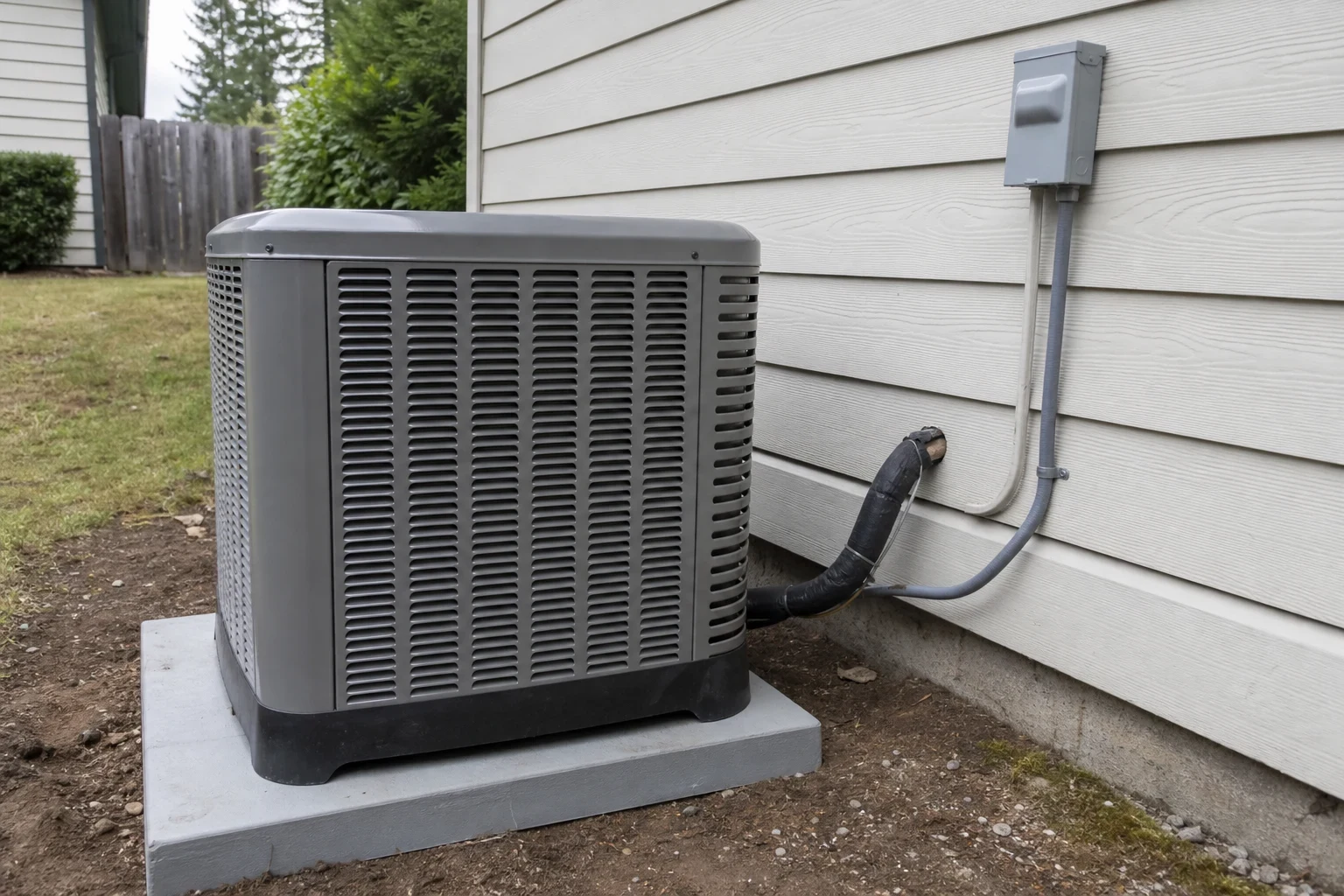
Once the interior is closed up, we set the indoor unit, pour or place the outdoor condenser pad, connect line sets, and pressure test the refrigerant circuit with nitrogen before evacuating it.
- 05
Startup and commissioning
We check refrigerant charge, gas pressure, temperature rise across the furnace and airflow at the equipment. You and your builder get the readings in writing.
Questions about New Construction HVAC?
Call(509) 398-9080When to bring us into your build
Plans are drawn but not framed
This is the best time to call. We can flag where the furnace, air handler or condenser should sit, and how much space the mechanical room needs, before walls go up.
Your builder's sub fell through
Schedules slip when a mechanical contractor drops out. We can step in at rough-in, as long as framing is still open.
You want to compare heat pump and gas
New homes are a natural fit for heat pumps, but not every lot has the same fuel options. We'll give you a straight comparison for your plan.
An addition or ADU needs its own heat
A detached shop, guest unit or large addition often does better with its own system. Ductless mini-splits are a common answer here.
How a new construction job runs
- 1
Plan review and free estimate
Talk us through your plans by phone, then we review the drawings in person. We run the load calculation and give you a free written quote with equipment model numbers and line items.
- 2
Permit and rough-in
We pull the mechanical permit and complete rough-in on the builder's schedule. The rough-in inspection happens before insulation goes in.
- 3
Trim-out and equipment set
After drywall and paint, we set equipment, connect gas and refrigerant lines, and wire the thermostat.
- 4
Startup, final inspection and walkthrough
We commission the system, pass final inspection and show you the filter location, thermostat settings and service access points.
What moves the price of new construction HVAC
Your quote depends on the house, not a per-square-foot rate. Two homes of the same size can land far apart once we account for fuel type, efficiency and layout. Every quote is written and itemized, and estimates on new installations are free.
- Equipment type and efficiency
- A variable-speed cold-climate heat pump costs more upfront than a single-stage furnace and AC. It can cost less to run, and we can help you claim Avista rebates and federal tax credits on heat pumps.
- Capacity from the load calculation
- A well-insulated house often needs a smaller unit, which lowers equipment cost. Large window walls or vaulted ceilings push capacity up.
- Number of zones or indoor units
- A single-zone system costs less than multiple zones or several mini-split heads serving separate wings.
- Line set length and venting
- Long refrigerant runs between the condenser and indoor unit add material and labor. Furnace venting through a sidewall versus the roof also changes the work.
New construction HVAC questions
Why not just size the system by square footage?
Square-footage rules ignore insulation, windows and air sealing. In a new, tight house they usually oversize the equipment. Oversized units short-cycle, wear parts faster and leave rooms uneven, so we calculate the actual load.
Do you work directly with my builder?
Yes. We coordinate rough-in and trim-out dates with your builder or general contractor and schedule inspections around their timeline. You get the same written quote they see.
What credentials do you carry for new construction work?
We are licensed and bonded in Washington, and we carry $1M general liability insurance. Builders and lenders often ask for proof of both, and we can provide it before work starts.
Should a new home get a heat pump or a gas furnace?
It depends on fuel availability at your lot, your electric rates and how you want the house to feel in January. Cold-climate heat pumps now heat well in eastern Washington winters, and dual-fuel systems pair one with a gas furnace for the coldest nights. We'll lay out the trade-offs with numbers.
Do you serve builds outside Rosalia?
Yes. We take new construction work in Spokane, Cheney, Colfax, Medical Lake, Airway Heights and the surrounding area.
What happens if something fails after move-in?
Call us and we'll diagnose it. Repairs carry our 1-year labor warranty on all repairs, and you can add a maintenance plan to keep the new system tuned from the first season.
Get your new build's system sized right
Tell us about your plans and timeline. We'll run the numbers and give you a free written quote before any work begins.