ServicesMaintenance Plans
HVAC Maintenance Plans in Rosalia
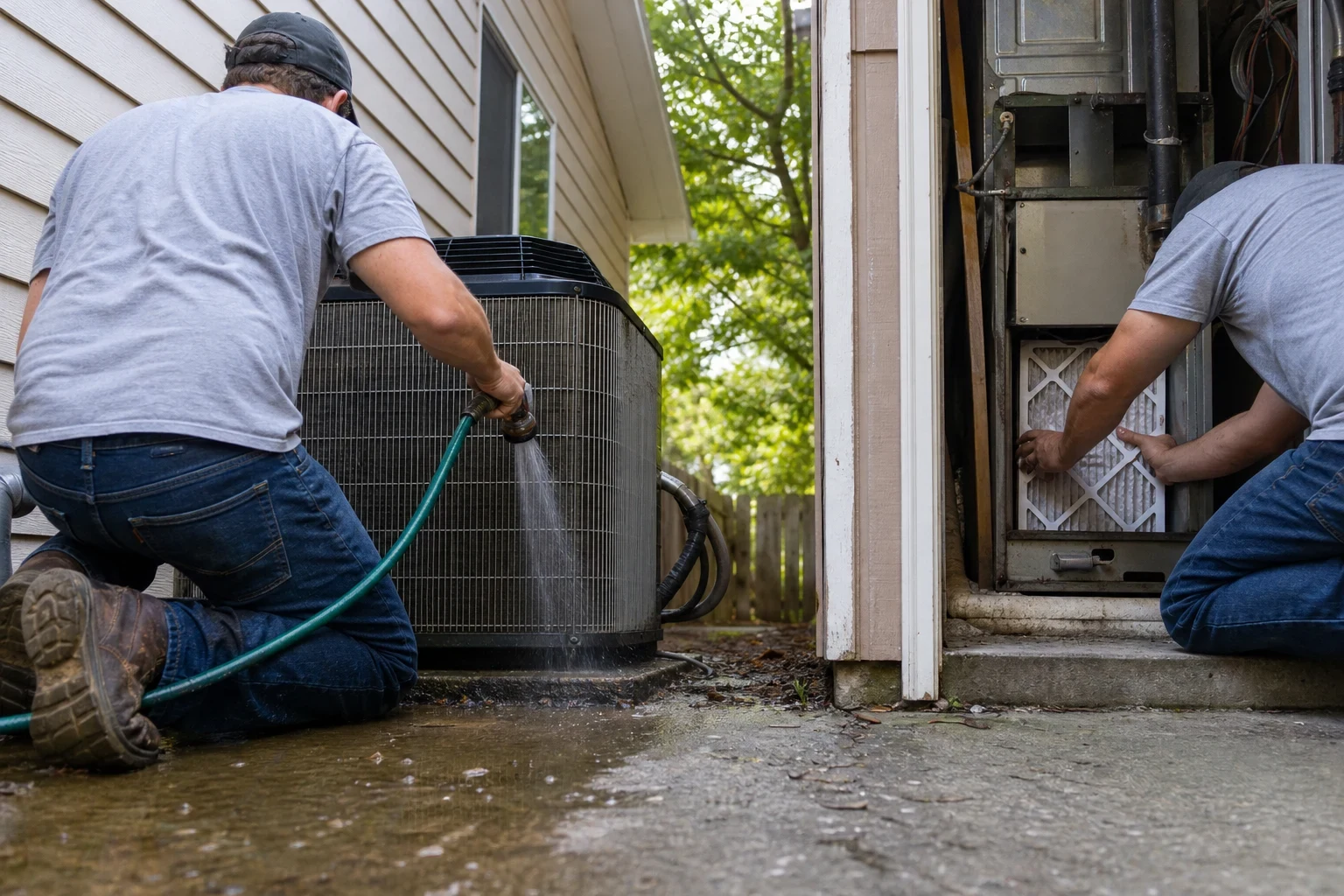
A maintenance plan puts your furnace or heat pump and your AC on a schedule. You get a fall heating tune-up and a spring cooling tune-up, with readings written down each visit. You also get repair discounts, priority scheduling and a clear record of how your equipment is aging.
What a plan does and who it fits
Most no-heat and no-cool calls trace back to parts that wear slowly. A flame sensor gets coated in oxide. A clogged filter trips the high-limit switch. A run capacitor drifts below its rated microfarads until the compressor can't start on a hot afternoon. A tune-up catches these while the system still runs, so you replace a small part on a scheduled visit instead of during a cold snap.
Pricing starts at $14.99 a month. For that you get your seasonal tune-ups, a member discount on any repair we find and an earlier place on our calendar when the first cold or hot week fills it. Plans cover gas furnaces, central air, heat pumps and ductless mini-splits.
A plan is the right call if your system is past its first few years or has needed a repair recently. It also makes sense if you bought your home without service records and want to know where things stand.
What each tune-up includes
- 01
Furnace safety checks
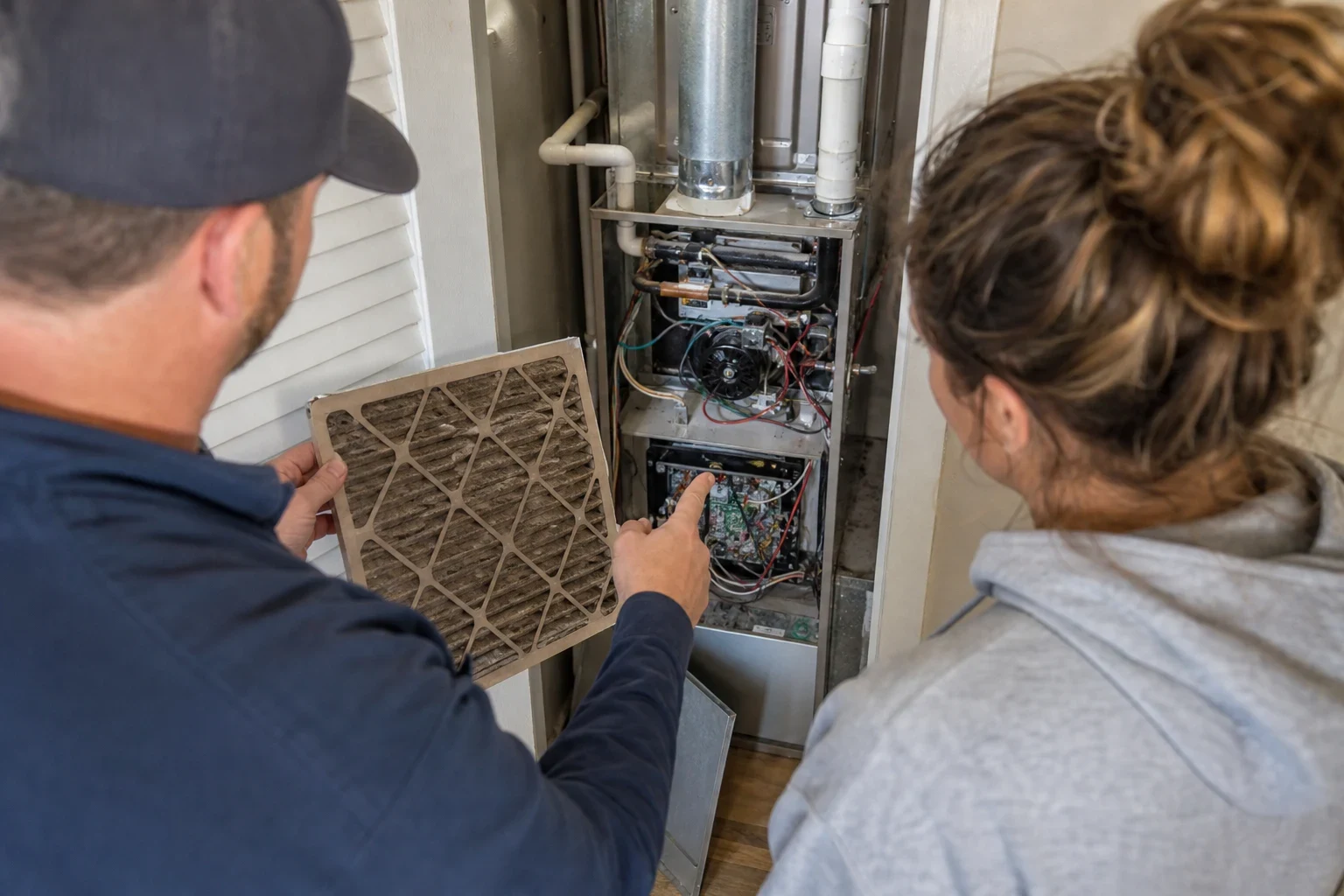
We inspect the heat exchanger for cracks and test for carbon monoxide at the flue and supply registers. We confirm the inducer motor and pressure switch prove draft before ignition. If we find a crack, we show you photos and explain why it is a shutdown item.
- 02
Ignition and gas pressure
We clean the flame sensor, check the hot surface igniter's resistance and measure manifold gas pressure against the manufacturer's spec. Low gas pressure gives short flames and weak heat, and it can let condensation form inside the heat exchanger.
- 03
Coils and refrigerant charge
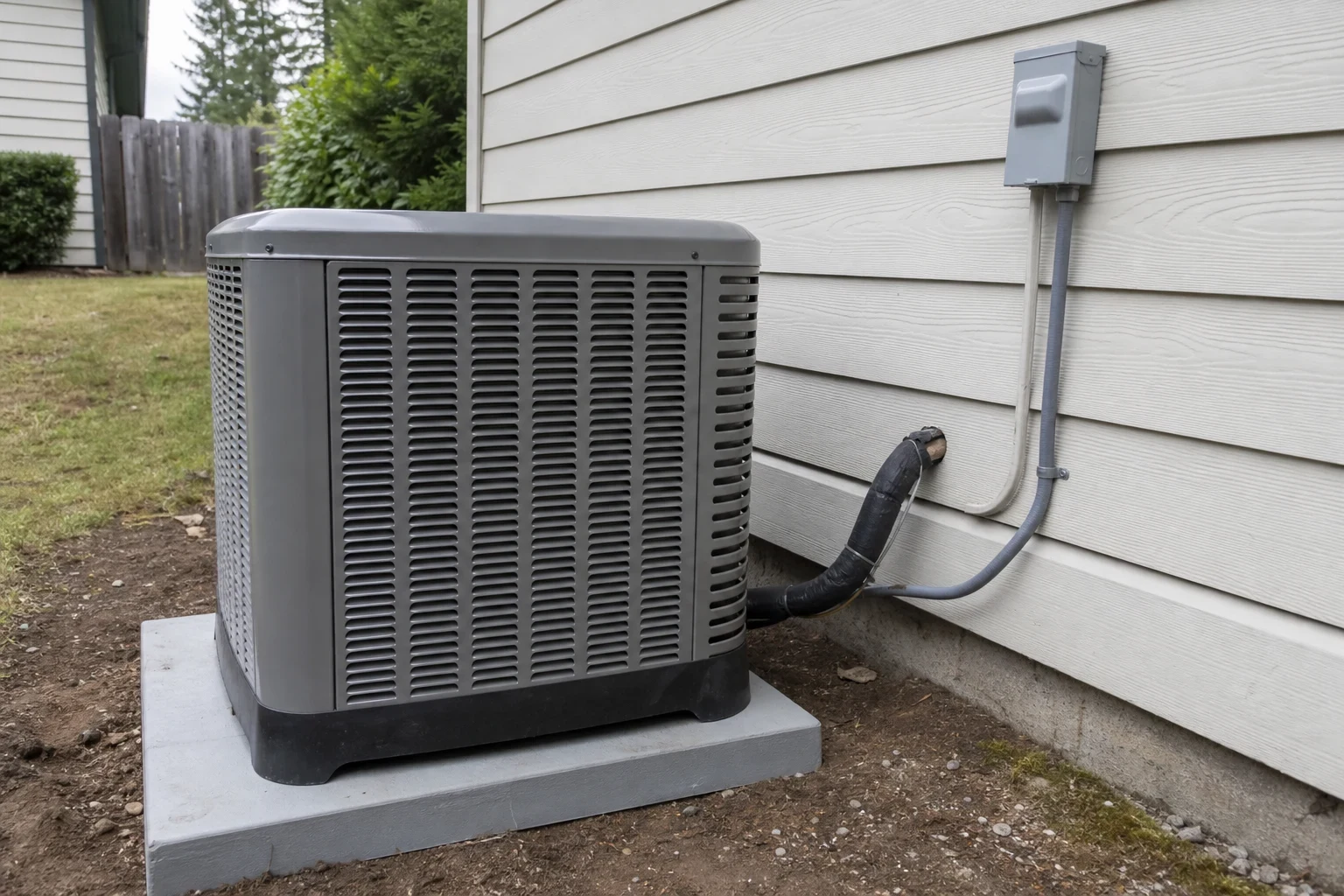
We clean the outdoor condenser coil, check refrigerant charge by superheat or subcooling and record the temperature split across the evaporator coil. Chaff and dust from summer harvest pack into condenser fins and raise head pressure, which shortens compressor life.
- 04
Electrical components
We test start and run capacitors against their rated values, inspect contactor points for pitting and tighten line-voltage connections. These inexpensive parts cause a large share of mid-summer breakdowns.
- 05
Drains, blower and filter
We flush the condensate line and trap, test the float switch and check blower motor amp draw. We inspect the blower wheel for buildup and replace or check the filter.
- 06
Heat pump and mini-split extras
On heat pumps we force a defrost cycle, confirm the reversing valve shifts cleanly and test the auxiliary heat strips. Mini-split heads get their filters and indoor coils cleaned, and we check the line set insulation outside.
Questions about Maintenance Plans?
Call(509) 398-9080Signs your system is overdue for a tune-up
Higher bills, same thermostat setting
Dirty coils and a weak capacitor make motors draw more current for the same output. The system runs longer to reach the same temperature.
Short cycling
The furnace lights, runs a few minutes and shuts off. A dirty flame sensor or an overheating heat exchanger tripping the high limit is the usual cause.
Ice on the refrigerant lines
Frost on the suction line or indoor coil points to low airflow or low charge. Turn the system off and let it thaw, because running it iced can send liquid refrigerant back to the compressor.
Water near the furnace
High-efficiency furnaces and AC coils both make condensate. A clogged drain or trap lets it back up and can trip the float switch or soak the floor.
No service records
If you can't remember the last tune-up, a baseline visit gives you measured numbers to compare against next season.
How a plan visit runs
- 1
Set the schedule by phone
You call and we book a fall heating visit and a spring cooling visit. Plan members get priority scheduling when the first cold week fills the calendar.
- 2
Arrive and prepare
The technician confirms your equipment, protects the floor around the furnace or air handler and shuts off power and gas as needed before opening panels.
- 3
Test, clean and measure
We work through the checklist for your system. Gas pressure, temperature rise, refrigerant readings and capacitor values go on a written report you keep.
- 4
Findings and your options
If a part is failing, you get a written quote before any work begins, with the plan discount applied. Nothing is replaced without your approval. Any fix we make is covered by our 1-year labor warranty on all repairs.
- 5
Notes for next season
We keep your readings on file. Next visit, we compare them so a slow decline in a capacitor or a dropping temperature split shows up early.
What sets the price of a plan
Plan pricing depends mostly on how much equipment we service and how long each visit takes. We ask a few questions by phone and give you a free quote for your setup before you sign up. Repairs found during a visit are quoted separately, in writing.
- Number of systems
- A single furnace with a central AC takes less time than a home with two systems or a heat pump plus a backup furnace.
- Type of equipment
- Each mini-split head needs its own coil and blower cleaning. More heads mean a longer visit.
- Age and condition
- An older system or one that has gone years without service may need a deeper first cleaning of coils and the blower wheel.
- Filter size and type
- A standard 1-inch filter costs less to replace than a 4- or 5-inch media filter or a specialty filter.
Maintenance plan questions
How often should my system be serviced?
Twice a year for most homes. The furnace gets checked in fall before heating season and the AC in spring before the first hot stretch. A heat pump works in both seasons, so it gets a visit before each.
Does the plan cover repairs?
The plan covers the tune-ups. Repairs are not included, but members get a discount on them. You always see a written quote first, and our labor on every repair carries a 1-year warranty.
Do I need a plan on a new system?
Many manufacturer warranties expect documented annual maintenance, so check your warranty paperwork. Our written reports give you that record. A new system also benefits from a first-year check on refrigerant charge and drain setup.
Who works on my equipment?
We are licensed and bonded in Washington and carry $1M general liability insurance. The technician who visits explains each reading and shows you photos of anything that needs attention.
What happens if my system fails between visits?
We handle 24/7 emergency HVAC repair, with no emergency or after-hours fees. Plan members also get priority scheduling, and the diagnostic fee is credited toward the repair.
Can I still change my own filters?
Yes, and you should check them monthly during heavy heating and cooling use. We'll tell you the correct size and type for your system at the first visit.
Put your system on a schedule
Tell us what equipment you have and we'll give you a free quote on a plan by phone. If something has already quit, we handle 24/7 emergency HVAC repair too.