ServicesFurnace Installation
Furnace Installation in Rosalia
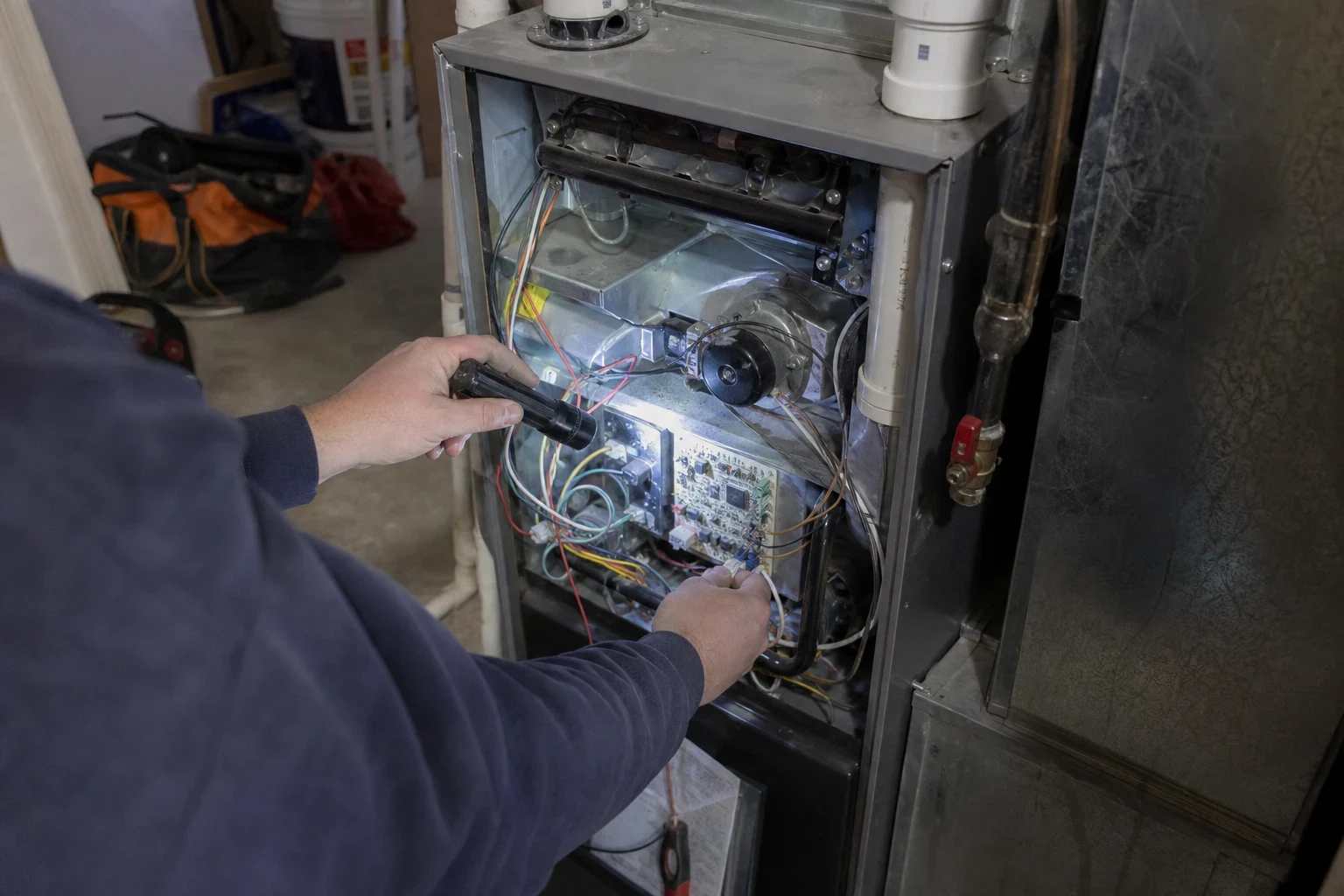
We size your new furnace from a room-by-room heat loss calculation, match the venting to its efficiency, and test combustion before we leave. You get a free estimate and a written quote that lists the equipment, the venting work and the permit before any work begins.
When a new furnace is the right call
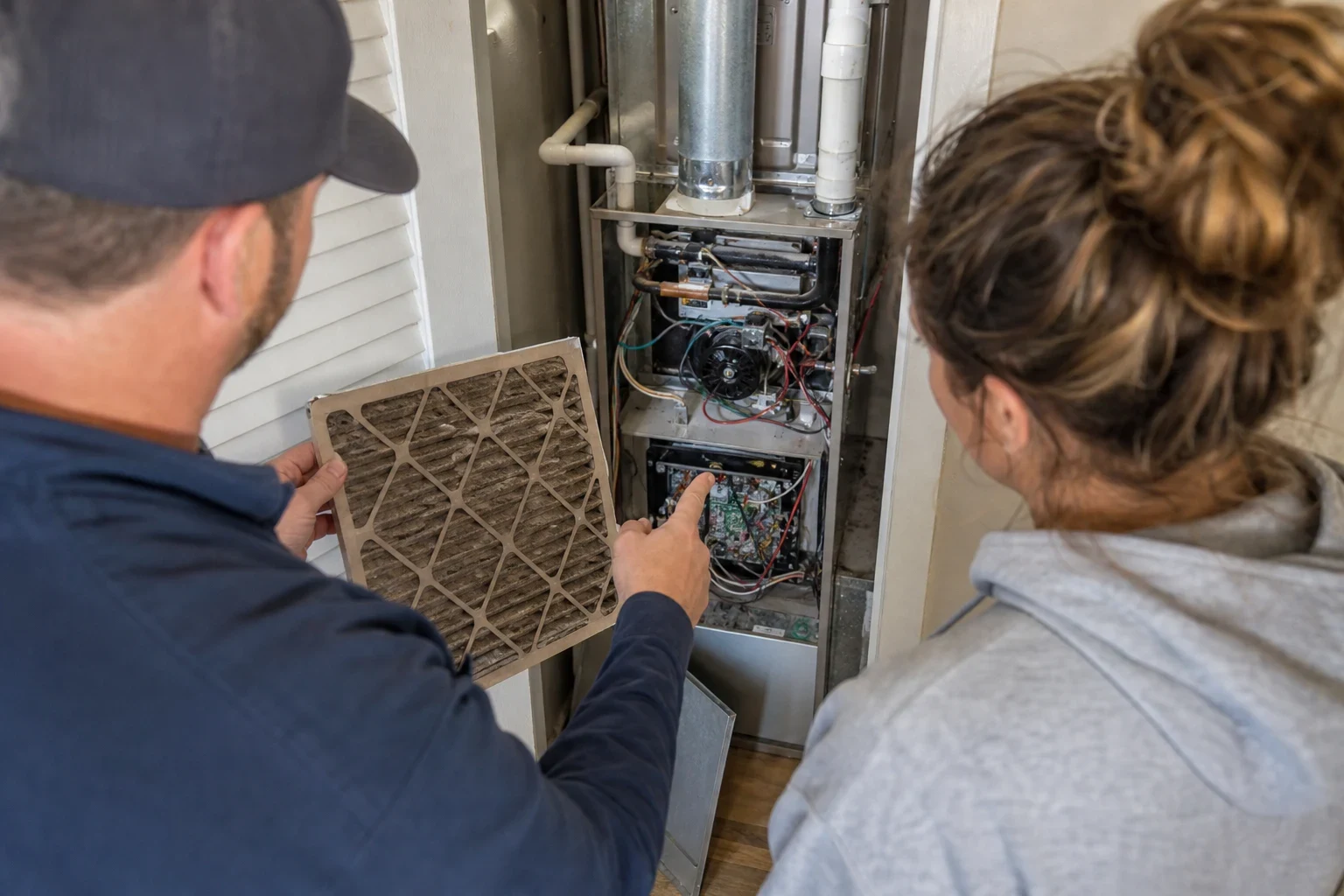
Replacement makes sense when the heat exchanger is cracked, when repairs on a furnace past 15 to 20 years keep stacking up, or when the unit simply cannot hold temperature on the coldest nights. A cracked heat exchanger is the clearest case. It can leak combustion gases into the air your blower moves through your home, and most manufacturers stop supplying parts for older models.
If your furnace is younger and the problem is a single failed part, like an igniter, inducer motor or control board, a repair is usually the better spend. We will tell you which one we see and why. Our Furnace Repair page covers that side of the work.
What a furnace installation includes
Heat loss calculation
We measure your home and account for insulation, windows and air leakage to size the furnace in BTUs. An oversized unit short-cycles, wears its igniter and limit switch faster, and leaves rooms uneven.
Venting matched to efficiency
An 80% AFUE furnace vents hot exhaust through a metal flue. A 95% condensing furnace vents cool, wet exhaust through sealed PVC and needs a condensate drain. If moving to a condensing unit leaves a gas water heater alone in an oversized chimney, we flag it and include the fix in the quote.
Gas or propane connection
We confirm your gas line can supply the new burner's input, install a new shutoff and sediment trap, and leak-test every joint. Propane installs get the manufacturer's LP conversion kit and the manifold pressure set to spec.
Removal and haul-away
We disconnect, remove and dispose of the old furnace, then clean up the mechanical area.
Thermostat and filter setup
We wire the thermostat for the furnace's staging and set up a filter rack that fits the new cabinet, so the blower is not starved for air.
Signs your furnace is due for replacement
- A cracked heat exchanger
- Found during an inspection or flagged by a carbon monoxide alarm. This is a replace-now finding, not a watch-it finding.
- Repeated repairs on an older unit
- Two or three significant repairs in a few seasons on a furnace past 15 years usually means more are coming.
- It cannot keep up in deep cold
- When temperatures drop well below freezing for days at a time and the furnace runs constantly without reaching setpoint, it may be undersized or losing output.
- Yellow, lazy burner flames
- A healthy gas flame is blue and steady. Yellow or wavering flames point to poor combustion, which raises carbon monoxide risk.
- Rising gas bills with no change in use
- Older 60% to 70% AFUE furnaces send a third or more of their fuel up the chimney.
How the installation runs
- 1
Free estimate at your home
We inspect the current furnace, venting, gas supply and electrical, run the load calculation, and go over options for efficiency and staging. You get a written quote before anything is scheduled.
- 2
Permit
We pull the mechanical permit so the install is inspected and on record.
- 3
Install day
We lay floor protection, shut off gas and power, remove the old unit, set the new furnace, and connect venting, gas, condensate and wiring. Most straightforward swaps finish in one day.
- 4
Startup and testing
We run a combustion analysis, set gas pressure, and measure temperature rise and static pressure to confirm the blower speed is right. We walk you through the thermostat and filter changes before we leave.
What moves the price of a new furnace
Your quote depends on the equipment you choose and on what your home needs for it to run safely. We list each item on paper so you can see where the money goes. Estimates are free on installations and replacements.
- Efficiency and staging
- A 95% AFUE two-stage furnace with a variable-speed blower costs more up front than a single-stage 80% unit, and burns less fuel over its life.
- Venting changes
- Switching from metal flue to PVC means new vent runs through a wall or roof, plus a condensate drain. A water heater left in an oversized chimney may also need a liner.
- Fuel and gas supply
- Propane conversions and undersized gas lines add parts and labor.
- Location and access
- A tight crawlspace or attic install takes longer than a basement swap with clear access.
Furnace installation questions
- Should I choose an 80% or a 95% furnace?
- With long heating seasons, a 95% condensing furnace usually pays back its higher cost through lower fuel bills. An 80% unit can still make sense if PVC venting would be very hard to route. We price both so you can compare.
- Would a heat pump be a better fit than a furnace?
- Sometimes. A cold-climate heat pump paired with a gas furnace as backup works well for many homes. If you go that direction, we can handle the paperwork side too, including Avista rebates and the federal tax credits that apply to heat pumps. Our Heat Pumps page explains the options.
- What credentials do you carry for gas furnace work?
- We are licensed and bonded in Washington and carry $1M general liability insurance. That matters on a job that involves gas lines and venting combustion exhaust out of your home.
- Can you install the AC at the same time?
- Yes. Installing a matched furnace and air conditioner together lets us size the blower and coil as a set. See our AC Installation page for that side of the job.
- How do I keep the new furnace running well?
- Change the filter on schedule and have it tuned up each fall. Our Maintenance Plans include annual tune-ups and priority scheduling.
Find out what your home needs
We will size the furnace, check your venting and gas supply, and put every line item in a written quote. The estimate is free.